
In this article
- The short answer
- What affects small business website cost
- 1. What kind of website you need
- 2. Template or custom design
- 3. Who writes the content
- 4. How many pages, and how much detail
- 5. What happens after launch
- Warning signs in a quote
- How to get a price you can trust
- A quick checklist before you ask for quotes
- If you would like a second opinion
If you have ever asked three web designers what a website costs, you have probably received three very different answers. One says a few hundred pounds. Another says several thousand. A third says “it depends” and does not explain what on.
That is frustrating, and it is not your fault. A small business website cost is not one fixed number, because a website is not one product. This guide explains what actually moves the price, so you can read any quote and understand what you are paying for.
The short answer
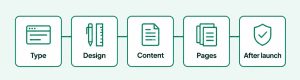
Small business website cost depends on five things: what the website needs to do, how it is designed, who writes the content, how many pages it has, and what happens after launch. Two quotes can both say “5-page website” and describe completely different amounts of work. What matters is not only the total, but what the total includes.
What affects small business website cost
1. What kind of website you need
A simple site that tells people who you are, what you do and how to contact you is the smallest kind of job. A site that takes bookings, sells products or lets customers log in is bigger, because there is more to build, test and keep secure.
- Information website: a few pages, a contact form and clear details about your business.
- Online shop: products, basket, checkout, payments, delivery and tax settings.
- Custom features: booking systems, calculators, member areas, or connections to other software.
2. Template or custom design
A ready-made template is quicker and cheaper to start with. It can work well for a simple site. The trade-off is that you work inside what the template allows, and many templates load far more code than a small site needs, which can make pages slower.
A custom build is designed around your business and your customers. It takes longer, so it usually costs more, but it can be lighter, faster and easier to change later.
Neither is automatically better. The right choice depends on what your website needs to do and how much it may need to change in the future.
3. Who writes the content
Text and photos are often the part that takes the longest. If you provide clear text and good photos, the work is smaller. If you would like help writing your pages or finding images, that is extra time, and a fair quote will say so.
4. How many pages, and how much detail
More pages means more to design, write, build and check on phones and tablets. A five-page site and a thirty-page site are different projects, even when they look similar from the outside.
5. What happens after launch
This is the part people most often forget to ask about. A website needs hosting, security updates, backups and someone to call when something breaks. Some quotes include this. Some do not, and the cost appears later.
Before you say yes, ask:
- Is hosting included, or do I pay for it separately?
- Who looks after updates and backups?
- If something stops working next year, who fixes it, and what does that cost?
Warning signs in a quote
You do not need to be technical to spot a small business website cost quote that deserves a second look.
- No written breakdown. A price with no explanation of what is included makes comparison almost impossible.
- A very low price that does not say what is left out. Things like the contact form, mobile layout or basic search visibility may be charged separately.
- You would not own the website. The domain name and the site itself should be registered in your name.
- Pressure to decide quickly. A good project does not need a countdown timer.
How to get a price you can trust
The simplest way is to describe your business and what you want the website to do, then ask for a fixed price in writing. A fixed price means you know the total before any work begins, and the quote should list what is included and what is not. Knowing your small business website cost before work begins is the whole point.
If you are not sure what you need, that is fine. Many people start with an existing website that is not working as well as it should. In that case, the first step is usually to look at what is already there and decide whether it needs a few fixes or a rebuild. Fixing the right things is often cheaper than starting again. Our page on how we help explains what that looks like in practice.
A quick checklist before you ask for quotes
- What is the website for? (enquiries, bookings, selling, information)
- Roughly how many pages do you expect?
- Do you already have text and photos, or will you need help?
- Do you need an online shop or any special features?
- Who will look after the site once it is live?
With those answers written down, any quote becomes easier to read and compare, and you can ask better questions.
If you would like a second opinion
If you already have a website and are not sure whether it needs fixing, we offer a free website check. We look at your site, tell you what we find in plain English, and you decide what to do next. There is no obligation and no sales pressure. If you are unsure whether your current small business website cost is fair, we are happy to take a look.
Request a free website check, or send us a few lines by email and we will reply.